
Volume Profile Visible Range (VPVR) Techniques: Mapping High-Volume Nodes as Macro Support
Traditional technical analysis relies heavily on time-based indicators. Moving averages, the Relative Strength Index (RSI), and standard vertical volume bars all evaluate how price behaves over arbitrary chunks of time (minutes, hours, days). However, financial institutions and sophisticated market makers do not view markets through the lens of time. Instead, they view markets through the lens of liquidity and price efficiency.
To track where large capital pools are accumulating or distributing digital assets, advanced traders utilize Volume Profile Visible Range (VPVR) techniques. By transposing trading volume from the traditional horizontal time axis to a vertical price axis, the market reveals its true structural backbone. This methodology shifts analysis away from subjective retail chart patterns toward objective auction market theory, allowing analysts to accurately map high-volume nodes as macro support.
The Mechanics of Volume-by-Price Architecture
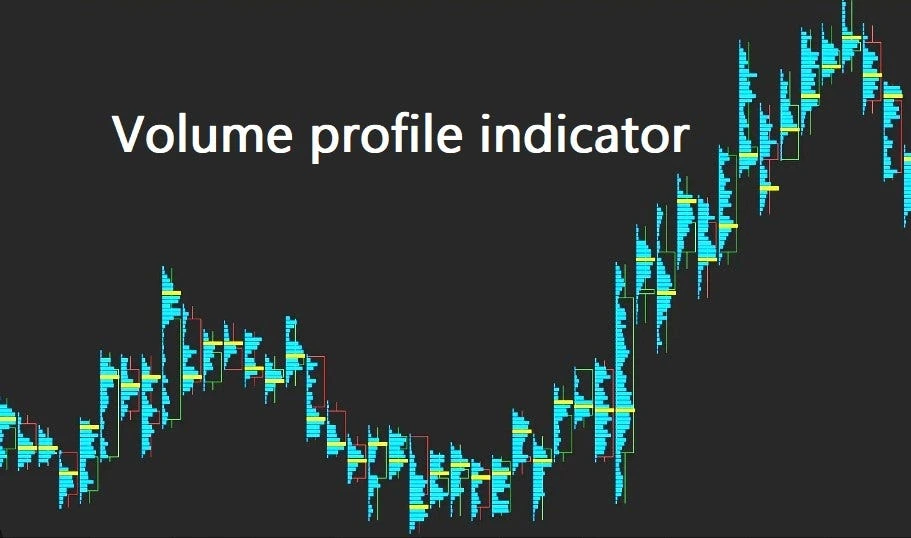
To utilize Volume Profile Visible Range (VPVR) techniques effectively, an analyst must first understand the underlying components of the horizontal histogram. Unlike standard volume indicators that merely tell you when a transaction occurred, VPVR indicates exactly where it occurred by calculating the total shares or tokens exchanged at individual price ticks.
Point of Control (POC)
The Point of Control (POC) represents the absolute highest concentration of traded volume within the visible chart range. It serves as the ultimate equilibrium point—the price level that both buyers and sellers agreed was “fair value” for the longest duration or highest capital allocation. On a macro chart, the POC acts as a powerful financial magnet. When price strays too far from the POC without fundamental structural backing, it tends to mean-revert to this high-liquidity anchor.
Value Area High (VAH) and Value Area Low (VAL)
According to standard statistical distribution models, the Value Area (VA) encompasses the price range where 70% of the total trading volume took place within the analyzed timeframe.
- Value Area High (VAH): The upper boundary of this high-volume zone, acting as a structural ceiling during bearish phases or a launchpad during expansionary phases.
- Value Area Low (VAL): The lower boundary of the zone, representing the baseline where buyers historically stepped in with size.
When an asset trades between the VAH and VAL, it is considered to be in a state of “balance.”
High-Volume Nodes (HVNs) vs. Low-Volume Voids (LVNs)
The real power of utilizing Volume Profile Visible Range (VPVR) techniques lies in identifying structural anomalies: the peaks and valleys of the vertical histogram.
High-Volume Nodes (HVNs) as Macro Support
High-Volume Nodes (HVNs) are the pronounced peaks in the volume profile. They represent historical consolidation zones where intense auctioning occurred between buyers and sellers. When macro crypto assets pull back toward an underlying HVN, these zones act as heavy cushions.
Because institutional orders require deep liquidity to fill without causing massive slippage, large market participants purposely place buy walls within historical HVNs. Consequently, price discovery slows down dramatically at these shelves, turning them into formidable macro support walls.
Low-Volume Voids (LVNs) and Liquidity Gaps
Conversely, Low-Volume Voids (LVNs)—often referred to as low-volume nodes or liquidity gaps—are the deep indentations in the profile. These zones represent price coordinates where the asset moved so quickly that very little capital exchanged hands.
LVNs indicate an unfair auction price or an immediate imbalance between supply and demand. From a tactical standpoint, price treats low-volume voids like a vacuum. When price breaks out of an HVN and enters an LVN, it typically slices through the gap with high momentum because there is no historical order history to act as friction.
Strategic Implementation Framework
To safely integrate Volume Profile Visible Range (VPVR) techniques into a comprehensive macro trading strategy, analysts must account for the dynamic nature of the indicator while maintaining rigid risk parameters.
Step 1: Establish Multi-Timeframe Confluence
Because standard VPVR continuously recalculates based purely on the bars visible on your screen, it is highly vulnerable to zooming biases. To mitigate this:
- Load a high-horizon chart (e.g., 1-Week or 1-Day intervals) to capture the absolute macro structural architecture.
- Identify the major historical HVNs and lock those price levels manually using horizontal ray lines.
- Move to lower execution timeframes (e.g., 4-Hour or 1-Hour intervals) to observe how modern intraday order flow interacts with those macro lines.
Step 2: Spot vs. Derivatives Order Verification
An HVN built purely on derivatives liquidations can occasionally offer unreliable support. Cross-reference your visible range structural nodes with spot exchange order book depth analysis to ensure that real, spot-driven asset accumulation is present at the identified macro support shelf.
Step 3: Execution Against the Volume Shelf
When a digital asset experiences a macro correction, look for a stabilization pattern just above a verified high-volume node or near the Value Area Low (VAL).
Pro Tip: Structuring the Trade Location Institutional traders rarely chase a falling knife. Instead, wait for price to enter the top layer of an HVN shelf, observe a deceleration in sell side momentum via derivatives funding rates, and set capital protection stops tightly below the underbelly of that specific volume node. If the shelf breaks, the asset will drop rapidly through the next low-volume void, making a tight stop mandatory.
Market Structures: Strengths and Tactical Limitations
While volume-by-price analysis offers unparalleled visibility into institutional positioning, relying blindly on any technical tool can lead to catastrophic capital degradation.
Advantages of VPVR Mechanics
- Impeccable Precision: Replaces lagging, arbitrary indicators with cold, hard transactional history across specific price coordinates.
- Friction Mapping: Clearly illustrates where trends will accelerate (LVNs) and where they will grind to a halt (HVNs).
- Objective Fair Value Calculation: Removes emotional bias by showing exactly where the broader market spent its capital (POC).
Core Vulnerabilities and Trade Risks
- The Zoom Dependency Fault: If you accidentally shift your chart horizontally, the profile alters its layout immediately. This can lead to misaligned volume shelves if the analyst fails to anchor the profile correctly.
- Historical Recency Bias: VPVR treats old volume and new volume with equal weight if both sit inside the visible screen window. In fast-moving crypto assets, an HVN formed two years ago may possess less actual liquidity than a node formed two weeks ago due to changing institutional mandates.
- Susceptibility to Macro Shifts: No volume shelf can withstand sudden, aggressive systemic liquidity shifts—such as a surprise tightening cycle from the Federal Reserve or unexpected regulatory crackdowns.
Strategic Ecosystem Infrastructure
To effectively dominate search results and demonstrate unquestionable topical authority, your core content strategy should link out into highly specific sub-topics while building internal link equity back to your main pillar resources.
FAQ SECTION
– What is the difference between VPVR and traditional vertical volume indicators?
- Traditional volume indicators measure the quantity of tokens or shares traded across specific units of time (e.g., a single day). Volume Profile Visible Range (VPVR) tracks the volume of transactions executed at specific price levels, regardless of the time it took to complete those trades, creating a clear horizontal map of market value.
– Why does my VPVR change when I zoom out on my chart?
- VPVR calculates its volume metrics strictly based on the data points currently visible inside your charting workspace. When you zoom out, you introduce more historical data bars into the calculation window, causing the indicator to automatically re-tally the volume and occasionally shift the location of the Point of Control (POC).
– How do traders execute trades using Low-Volume Voids (LVNs)?
- Traders view Low-Volume Voids as areas of zero structural friction. When price breaks cleanly out of a consolidation zone and crosses into an LVN, momentum traders open breakout positions, expecting the asset to quickly clear the gap and travel directly toward the next major High-Volume Node (HVN).
– Is the Point of Control (POC) a buy or a sell signal?
- The POC is neither inherently bullish nor bearish; it represents a state of total market equilibrium where supply and demand are perfectly balanced. Traders use it as a benchmark to determine whether an asset is overextended (expensive) or undervalued (cheap) relative to its historical high-volume anchor.
– Can high-volume nodes fail to act as support?
- Yes. High-Volume Nodes record historical transactional history, but they cannot predict future order flow. If an asset suffers a severe fundamental shock or systemic liquidation event, market makers will pull their bids from the HVN, allowing price to slice directly through established support structures.
FINANCIAL DISCLAIMER
Disclaimer: This article is provided for informational and educational purposes only. The technical analysis frameworks, volume profile strategies, and market methodologies discussed herein do not constitute investment advice, financial advice, or a personal endorsement to buy, sell, or trade any digital asset. Cryptocurrency markets are highly volatile and subject to sudden structural shifts. Readers should conduct thorough independent research and consult a licensed financial advisor before making any capital allocations.