The capital moat separating traditional equities from decentralized finance has officially dissolved. With the launch of ‘bStocks’ tokenized equities on BNB Chain, institutional-grade real-world assets (RWAs) have moved from static, walled-garden brokerages into fully programmable, self-custodial DeFi environments.
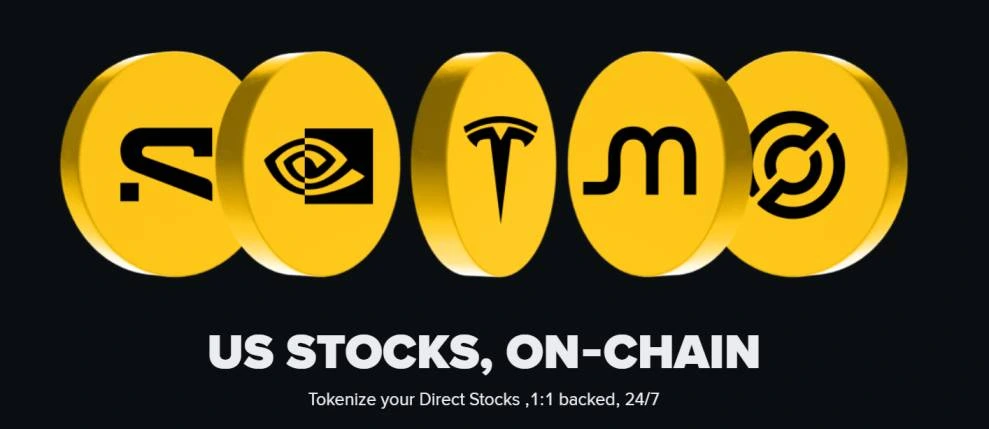
This launch represents a pivotal shift in the RWA race. Rather than relying on synthetic derivatives or contracts-for-difference (CFDs), the infrastructure facilitates 24/7 fractional trading of fully backed, 1:1 asset-backed certificates representing top-tier U.S. equities like Tesla (TSLAB) and NVIDIA (NVDAB). The immediate macroeconomic impact was felt across the ecosystem: the sudden requirement for on-chain gas and operational collateral injected massive buy-side liquidity into the network, allowing the native BNB token to bounce decisively after defending a critical technical support floor in the $570 to $575 range on June 20, 2026.
The Structural Architecture of bStocks
To understand why this product succeeds where early iterations faltered, one must look at its regulatory and clearing framework. The tokens are issued by BTech Holdings Limited, an Abu Dhabi Global Market (ADGM) affiliate, under a prospectus approved by the ADGM Financial Services Regulatory Authority (FSRA).
[User Funds Asset (USDT/USDC)]
       │
       ▼
[Nest Trading Ltd (ADGM Introduce Broker)]
       │
       ▼
[Alpaca Securities (U.S. Clearing & Custody)] ──► [1:1 Physical Shares Secured]
       │
       ▼
[BTech Holdings Ltd (Mints BEP-20 bStocks)]
Unlike the synthetic stock trials of 2021, these tokens are legally classified as Certificates representing certain Financial Instruments under Paragraph 92, Schedule 1 of the FSMR. This structure means they do not confer direct voting corporate governance rights, but they grant absolute economic rights to the underlying asset’s performance and distributions. Clearing, custody, and dividend logistics are handled downstream by Alpaca Securities, a regulated U.S. broker-dealer, ensuring that every BEP-20 token moving on-chain is backed by a physical share in a traditional vault.
Corporate Actions and the On-Chain Rebasing Mechanism
One of the greatest technical hurdles for tokenized equities has always been corporate actions—specifically, stock splits and dividend distributions. Traditional brokerages handle these via manual database entries. The launch of ‘bStocks’ tokenized equities on BNB Chain resolves this through an on-chain rebasing architecture called the Multiplier, utilizing the BEP-677 token standard.
When an underlying corporation like NVIDIA pays a dividend, the protocol undergoes a specific programmatic cycle:
- Tax Withholding: A mandatory 30% U.S. withholding tax is deducted at the custodian level.
- Net Reinvestment: The remaining 70% cash dividend is automatically used to purchase more shares of the underlying equity in the traditional market.
- Multiplier Adjustment: Instead of airdropping fractional tokens to thousands of self-custodial wallets—which would incur crippling network gas fees—the smart contract modifies the global
Multipliervariable. Your wallet balance increases proportionally to the net dividend value automatically.
For example, in a 2-for-1 stock split, the smart contract adjusts the token supply parameter instantly: your token quantity doubles, while the oracle-fed price per token is halved, mimicking the exact economic realities of the traditional market without requiring user intervention.
Market Implications: Defending the $570 BNB Support Floor
The timing of the deployment provided a powerful macro cushion for the network’s native asset. Leading up to June 20, 2026, broad crypto market deleveraging and spot ETF outflows put severe downward pressure on altcoins. BNB retraced to test its structural line in the sand: the $570 to $575 demand zone.
BNB/USDT Price Action (June 2026)
$620 │
$600 │
$580 │         ┌───► [bStocks Buy-Side Liquidity Influx]
$570 │ ────────┴─────────────────────────── (Critical Support Floor Defended June 20)
     └──────────────────────────────────
The launch altered the short-term order book dynamics. Because bStocks require settlement fees in BNB and interact directly with decentralized applications (dApps), utility demand surged. Investors tokenizing their positions or executing 24/7 cross-asset trades generated a steady stream of buy-side pressure. This structural volume absorbed the macro selling flurries, establishing a firm bottom at $570 and initiating a healthy relief rally.
Pros, Cons, and Systemic Risks
While the integration represents a major milestone for a network that grew its RWA market cap by 60% to $3.6 billion in early 2026, it introduces unique trade-offs for institutional and retail market participants alike.
Advantages
- 24/7 Fractional Liquidity: Traditional equities are bound by the 9:30 AM to 4:00 PM EST market window. bStocks enable global investors to trade market-moving events over weekends with a minimum investment threshold of just $5.
- DeFi Composability: For the first time, an investor holding Microsoft or Tesla exposure can withdraw those assets to a self-custodial wallet (like Trust Wallet) and lock them as collateral on lending protocols like Venus or Lista DAO, unlocking liquid stablecoins without selling the underlying equity.
Disadvantages & Limitations
- Jurisdictional Exclusions: Due to strict securities laws, the product is completely unavailable to U.S. persons or residents, limiting its market footprint.
- Counterparty and Oracle Risk: Users are exposed to the solvency of BTech Holdings and the operational integrity of Chainlink-style oracle price feeds. A disconnect between the on-chain oracle and the live New York Stock Exchange (NYSE) feed could trigger arbitrage exploitation or erroneous liquidations in DeFi lending pools.
FAQ SECTION
– What are bStocks on the BNB Chain?
- bStocks are 1:1 asset-backed tokenized securities issued as BEP-20 tokens on the BNB Chain. They represent an economic interest in traditional U.S. equities, such as Tesla and NVIDIA, allowing users to trade them fractionally 24/7.
– How do dividends work with tokenized equities?
- Dividends are automatically processed on-chain using a rebasing mechanism. After a 30% U.S. withholding tax is applied, the net dividend is reinvested into the underlying stock. Your token balance automatically increases via a smart contract Multiplier adjustment.
– Can I withdraw bStocks to my own private wallet?
- Yes. Because they are standard BEP-20/BEP-677 tokens, you can withdraw them from the issuance platform to any compatible self-custodial wallet, such as Trust Wallet or Binance Wallet, and utilize them across decentralized applications.
– Are there any conversion fees when tokenizing shares?
- The platform offers zero conversion fees when moving between the direct underlying equities held via the introducing broker (Nest Trading) and the on-chain bStock tokens.
– Who is eligible to trade bStocks?
- The product is available to eligible non-U.S. users in permitted jurisdictions. Due to regulatory frameworks, U.S. citizens, residents, or anyone acting on behalf of a U.S. person are strictly prohibited from accessing or transacting in bStocks.
FINANCIAL DISCLAIMER
Regulatory and Risk Disclosure: This analysis is provided for informational and educational purposes only and does not constitute financial, investment, legal, or tax advice. Tokenized securities and digital assets involve a high degree of risk, including the risk of capital loss, regulatory shifts, oracle failures, and counterparty vulnerabilities. bStocks are certificates representing financial instruments under ADGM regulations; they are not direct shares of the underlying companies and carry no voting or governance rights. Ensure full compliance with your local jurisdiction’s laws before participating in RWA or crypto markets