
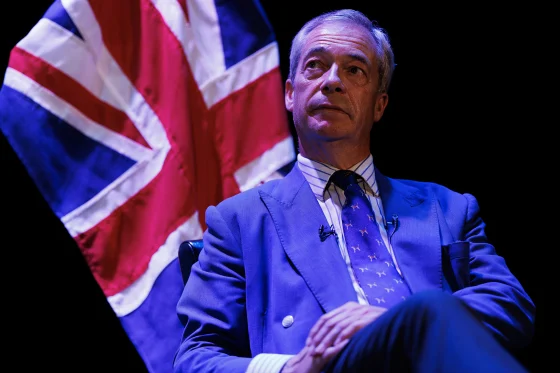
The £5M Crypto Gift Scandal: How Nigel Farage and the Shifting Rules of Political Capital Threaten UK Crypto Lobbying
The intersection of decentralized wealth and traditional political influence faces its stiffest regulatory test yet in Westminster. The developing Nigel Farage crypto gift controversy has rapidly evolved from a standard campaign-finance dispute into a high-stakes investigation led by the Parliamentary Standards Commissioner.
At the center of this probe is a historic, undisclosed £5 million gift delivered to the Reform UK leader by Thailand-based cryptocurrency billionaire Christopher Harborne. What began as a localized media query on May 8, 2026, has expanded into a complex debate over the retrospective duties of Members of Parliament (MPs), the classification of private wealth transfers, and the future boundaries of digital asset lobbying in the United Kingdom.
The Genesis of the Inquiry: A Shifting Defensive Narrative
The public defense offered by Farage and his legal team has undergone significant shifts:
- The Security Shield: Initially, the £5 million sum was characterized strictly as a private fund dedicated to guaranteeing Farage’s personal safety and lifelong security infrastructure.
- The Campaign Retrospective: By mid-May, the narrative pivoted. Farage publicly adjusted his defense, categorizing the multi-million-pound transfer as a retroactive “reward” or merit-based endowment for his historic role in executing the Brexit campaigns.
[May 8: Media Revelations] ──> [May 13: Standards Inquiry Opened] ──> [May 14-15: Shifting Public Defense]
This defense has done little to calm institutional observers. On May 13, 2026, the UK Parliamentary Standards Commissioner formally initiated a compliance inquiry to determine if this capital injection violated the strict disclosure criteria governing British lawmakers.
Deconstructing the Law: Parliament’s 12-Month Rule Explained
To understand why the Nigel Farage crypto gift is a legal flashpoint, one must analyze the House of Commons Code of Conduct—specifically the rules governing incoming members who received major capital influxes prior to their election.
Farage has repeatedly insisted that because he was a private citizen at the exact moment the funds were transferred, he maintained no statutory duty to report the asset to the Register of Members’ Financial Interests. However, parliamentary guidelines contain a specific catch-all mechanism designed to prevent the back-channel financing of political actors:
The 12-Month Retroactivity Rule: Incoming MPs must declare any financial benefits, gifts, or material advantages received up to 12 months prior to their election if those benefits carry direct relevance to their ongoing political life or could reasonably be perceived to influence their legislative conduct. The Code explicitly dictates: “If there is any doubt, the benefit should be registered.”
Because Farage shifted his policy positions within weeks of receiving Harborne’s funding—transitioning from a private commentator to an active parliamentary candidate—the Commissioner is examining whether the asset functioned as an undeclared political endowment.
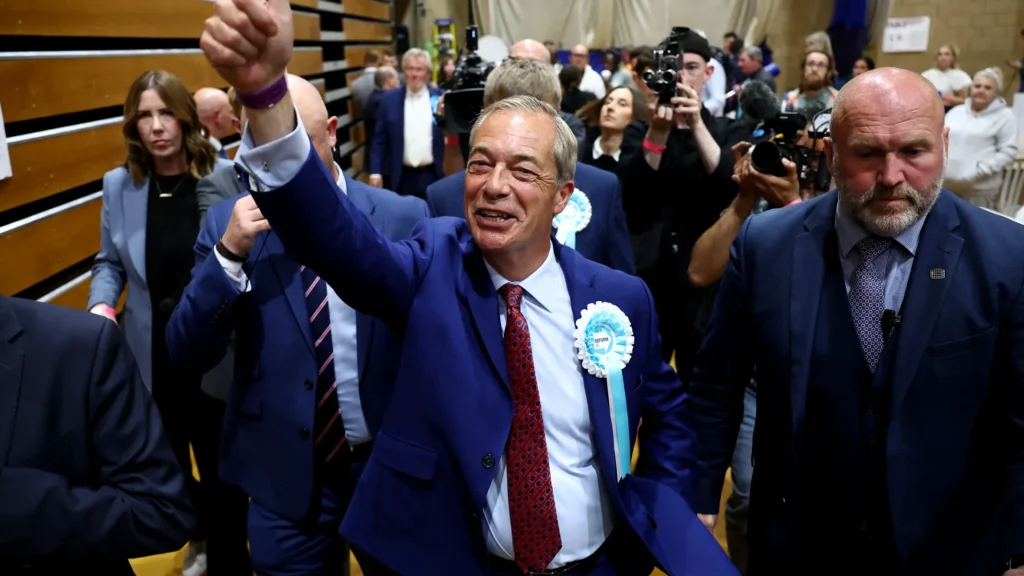
The Christopher Harborne Connection: Crypto Wealth Meets Westminster
Christopher Harborne is no stranger to the upper echelons of both corporate finance and political funding. Holding extensive business interests under alternative names like Chakrit Sakunkrit, Harborne has long been an anchor of liquidity in alternative political circles, previously financing the Brexit Party and various right-leaning initiatives.
More critically for financial analysts, Harborne’s wealth is heavily tethered to the underlying infrastructure of the digital asset markets. As a major stakeholder with historical connections to corporate entities behind top stablecoin issuers and major exchanges, Harborne represents a new breed of hyper-liquid, international crypto-investors capable of single-handedly bankrolling political movements.
The Legislative Nexus
The investigation gains a sharper edge when evaluating Farage’s legislative record since entering Parliament in July 2024. Farage has actively championed pro-crypto initiatives on the House floor, including advocating for policy shifts that would permit UK citizens to settle local tax obligations using decentralized digital assets.
While these policy goals align with broader fintech modernization efforts, the omission of a foundational £5 million connection to a dominant sector participant leaves Farage vulnerable to allegations of systemic conflicts of interest.
The Implications for UK Crypto Policy and Market Sentiment
The fallout from this inquiry extends far beyond Reform UK’s internal compliance headaches. It arrives at a delicate moment for the UK’s broader aspiration to position itself as a global, transparent Web3 hub.
       [Farage Undisclosed Gift Probe]
                      │
                      ▼
   [Heightened Regulatory Scrutiny on Wealth]
                      │
                      ▼
[Stricter KYC/AML Controls on UK Crypto Inflows]
1. Political Crackdowns on Capital Inflows
Prime Minister Keir Starmer has already leveraged the scandal during Prime Minister’s Questions (PMQs), confirming that the government is actively evaluating measures to safeguard democratic institutions from opaque, foreign-sourced wealth structures. The executive branch has signaled an intent to enforce a strict moratorium on direct crypto-denominated political donations and implement harder caps on overseas funding.
2. Enhanced AML and Source-of-Wealth Auditing
Financial institutions and regulated crypto asset firms operating within the UK should anticipate defensive regulatory escalations from the Financial Conduct Authority (FCA). Compliance teams will likely face intensified pressure regarding High-Net-Worth (HNW) politically exposed persons (PEPs) who utilize digital asset appreciation or block rewards to fund domestic entities.
Risk Assessment: Pros and Cons of Stricter Frameworks
The tightening of rules sparked by the Nigel Farage crypto gift probe creates a bifurcated landscape for the sector.
Advantages for the Industry
- Institutional Cleansing: Weeding out opaque, high-volume personal transfers forces political advocacy into formal, heavily audited corporate channels, increasing long-term legitimacy.
- Regulatory Clarity: Clearer definitions of what constitutes an “influence-buying asset” vs. a “private tech investment” reduce legal gray areas for crypto entrepreneurs.
Disadvantages and Regulatory Headwinds
- Over-Correction Biases: Fear of “dirty crypto money” may drive mainstream political parties to entirely isolate Web3 trade organizations, halting productive dialogue on tokenization and stablecoin legislation.
- Chilling Effect on HNW Allocations: International crypto founders may choose to entirely divert capital allocations away from UK-based entities to avoid aggressive, retrospective surveillance by tax and parliamentary watchdogs.
FAQ SECTION
– Why is the Nigel Farage crypto gift under formal investigation?
- The Nigel Farage crypto gift is under investigation by the Parliamentary Standards Commissioner because UK political rules state that incoming MPs must declare any financial benefits or gifts received in the 12 months prior to their election if the funds have relevance to their political career. Farage did not declare the £5 million sum from Christopher Harborne, claiming it was a private gift.
– Who is Christopher Harborne, the donor in the Farage scandal?
- Christopher Harborne (also known in Thailand as Chakrit Sakunkrit) is a dual-nationality billionaire businessman and veteran political donor. He derived a substantial portion of his wealth from early, structural stakes in the cryptocurrency industry, including affiliations with major digital asset ecosystems and stablecoin infrastructures.
– What are the rules regarding pre-election donations for UK MPs?
- Under Rule 5 of the House of Commons Code of Conduct, a Member of Parliament must log any material benefits received within the year preceding their election into the Register of Members’ Financial Interests if that benefit can be perceived by a reasonable observer to exert influence over their current legislative actions or political positions.
-Can UK citizens currently pay their taxes using cryptocurrency?
- No. While Nigel Farage and other pro-crypto lawmakers have publicly lobbied for policies allowing digital currencies to be accepted for public dues and local taxes, Her Majesty’s Revenue and Customs (HMRC) does not currently accept decentralized digital assets as valid settlement options for tax liabilities.
– What are the potential penalties if a breach of conduct is found?
- If the Parliamentary Standards Commissioner discovers an intentional breach of the disclosure rules, the matter is passed to the Commons Committee on Standards. Penalties can range from a mandatory formal apology and the rectification of the public record to a specified suspension from the House of Commons, which could potentially trigger a recall petition under severe circumstances.
FINANCIAL DISCLAIMER
Disclaimer: This article is provided strictly for informational and journalistic purposes. It does not constitute legal, financial, tax, or investment advice. Readers should consult with certified legal professionals and compliance experts before making decisions regarding political donations, digital asset structures, or cross-border asset management under UK law.