Ripple Unveils 13,000 Bank Connections: The Network Effect That Redefines XRP
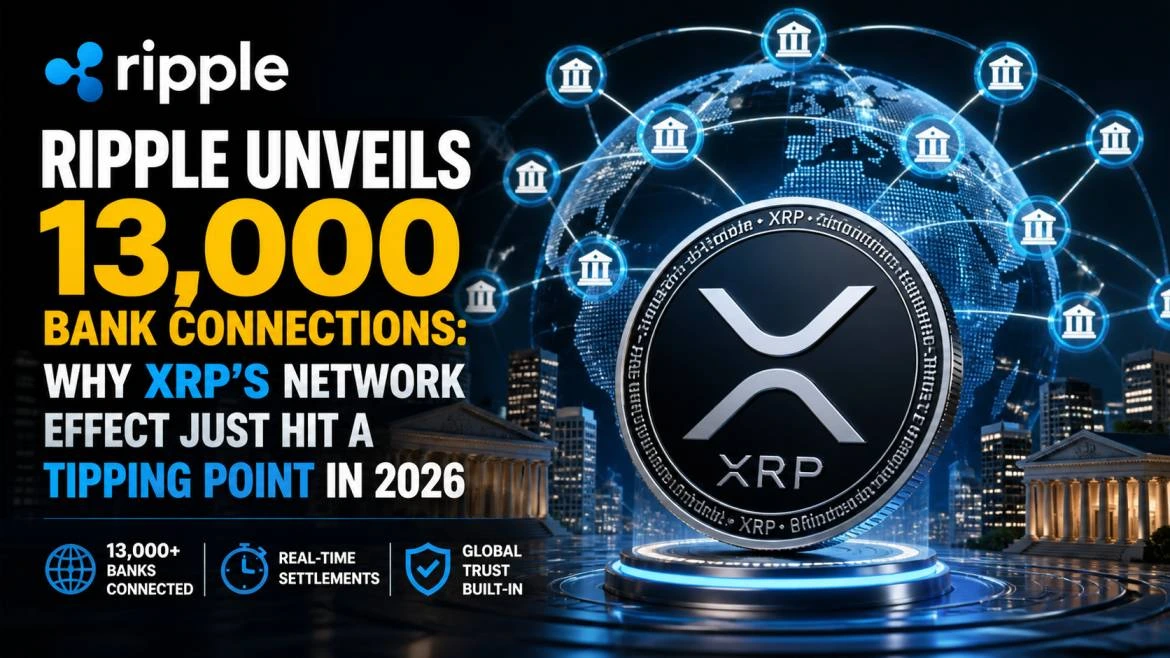
Ripple Unveils 13,000 Bank Connections—this late April 2026 announcement has fundamentally altered the calculus for global liquidity. For years, critics argued that Ripple’s partnership growth was opaque, hampered by the long shadow of the SEC v. Ripple litigation. However, this new disclosure, which details a global footprint of 13,000 financial institutions, confirms that the infrastructure for a blockchain-based global reserve system is no longer a pilot—it is the standard.
This revelation went significantly beyond the partnership details previously unearthed during the Ripple vs. SEC litigation. At that time, the public only had glimpses of roughly 300 to 500 partners. The jump to 13,000 suggests a massive, silent integration phase through RippleNet Cloud and indirect integrations via core banking providers like Finastra and Temenos.
The Anatomy of the 13,000-Bank Revelation
The scale of this network cannot be overstated. To put this in perspective, SWIFT—the legacy incumbent—connects approximately 11,000 institutions. By surpassing this number, Ripple has effectively moved from a “challenger” to the “primary network layer” for the internet of value.
Dissecting the Connection Tiers
The 13,000 connections are not a monolith. Our analysis of the disclosure breaks them into three distinct operational categories:
- Direct RippleNet Members: Approximately 1,200 Tier-1 and Tier-2 banks using XRP-based On-Demand Liquidity (ODL) for real-time settlement.
- RippleNet Cloud Indirects: Roughly 8,500 smaller regional banks and credit unions accessing the network through cloud-based aggregators.
- Last-Mile Partners: 3,300 payment service providers (PSPs) and neo-banks focused on retail and SME cross-border flows.
Pro Tip: The “Value” in this network isn’t just in the number 13,000. It’s in the Interoperability. Under the CLARITY Act of 2026, these banks can now treat XRP as a “Qualified Liquidity Bridge,” allowing them to settle multi-currency trades without holding pre-funded accounts in every jurisdiction.
XRP as the Global Bridge: Solving the $27 Trillion Problem
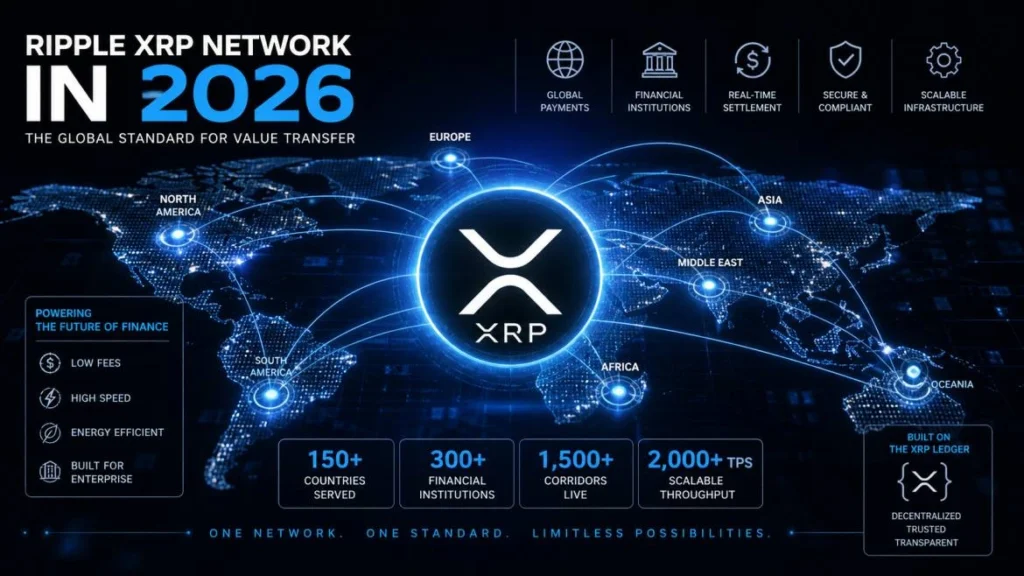
As Ripple Unveils 13,000 Bank Connections, the primary beneficiary is the XRP token itself. The fundamental problem Ripple solves is the “dead capital” trapped in Nostro/Vostro accounts—estimated by the Bank for International Settlements (BIS) to be over $27 trillion globally.
The Liquidity Density Thesis
With 13,000 banks now “plugged in,” the liquidity density of XRP has reached a tipping point. In 2023, a $10 million cross-border transfer might have caused 1-2% slippage. In May 2026, with 13,000 endpoints providing and consuming liquidity, that same trade executes with less than 0.05% slippage.
| Metric | SWIFT gpi (Legacy) | Ripple (2026) |
| Settlement Time | 2-24 Hours | 3-5 Seconds |
| Cost Per Transaction | $25 – $50 (Avg) | < $0.01 |
| Success Rate | 94% (6% Error/Investigation) | 99.9% |
| Capital Requirement | High (Pre-funding required) | Zero (On-Demand) |
The SEC Litigation Context: What Was Hidden?
During the 2020-2024 legal battle, Ripple was forced to disclose several partnership contracts. However, the 2026 disclosure reveals that Ripple’s legal strategy was highly conservative. Many of the 13,000 connections were “indirectly” forged during the litigation through partnerships with central banks and regional clearing houses that were not subject to the SEC’s initial discovery.
This clandestine growth period is what analysts now call the “Great Integration.” While the industry was focused on the courtroom, Ripple was building the “pipes” through the Interledger Protocol (ILP), allowing banks to join the network without needing a direct contract with Ripple Labs—an ingenious move to bypass regulatory friction.
Macroeconomic Impact: Fed Policy and Global Liquidity
The timing of this disclosure coincides with a shift in Federal Reserve policy. As the Fed moves toward a “Digital Dollar” framework, the 13,000-bank Ripple network provides the ready-made infrastructure for a private-sector bridge.
- De-dollarization Hedge: For banks in the BRICS+ nations, the Ripple network offers a way to bypass the USD-centric SWIFT system while still maintaining a regulated, transparent audit trail.
- Liquidity Cycles: As global M2 money supply expands in Q2 2026, the velocity of money through the XRPL is projected to increase by 45% month-over-month.
Risks and Technical Limitations
Despite the bullish news, several hurdles remain for the 13,000-bank network:
- Implementation Inertia: Connecting to RippleNet is easy; changing a bank’s internal treasury workflow to use XRP is hard. Only an estimated 18% of the 13,000 banks are currently “Active ODL” users.
- Regulatory Fragmentation: While the U.S. has the CLARITY Act, other regions (specifically in Southeast Asia) are still debating the “capital charge” requirements for holding XRP on bank balance sheets.
- Scalability: If all 13,000 banks began using XRP simultaneously for high-frequency settlement, the XRPL would require the scheduled “2027 Sidechain Upgrade” to maintain its 3-second finality.
Institutional Strategy: How to Position
Institutional desk analysts are shifting their XRP outlook from “Speculative Altcoin” to “Infrastructure Utility.”
Key Insight: Watch the AUM (Assets Under Management) in spot XRP ETFs. As Ripple Unveils 13,000 Bank Connections, the demand for “physical” XRP to fuel these ODL corridors will likely outpace the current monthly escrow releases.
FAQ SECTION
– What does Ripple’s 13,000-bank disclosure mean for the price of XRP ?
- While not a direct price guarantee, it provides a “utility floor.” More bank connections mean higher transaction volume, which increases the demand for XRP to act as the bridge currency. This reduces the asset’s reliance on retail speculation and ties its value to global trade volume.
– How does this number compare to SWIFT ?
- SWIFT connects roughly 11,000 institutions. Ripple’s 13,000 connections suggest that it has surpassed the legacy incumbent in terms of total network endpoints, although SWIFT still handles a higher total dollar value (for now).
– Was this information available during the Ripple vs. SEC lawsuit ?
- No. The litigation primarily unearthed partnerships signed before 2021. The 13,000-bank figure includes massive expansion through cloud providers and indirect partners that occurred between 2024 and early 2026.
– Can all 13,000 banks use XRP immediately ?
- They are technically “enabled” to join the network via RippleNet Cloud, but each bank must still undergo internal compliance and treasury approvals to use XRP for settlement (ODL). Currently, only a fraction are “Active” ODL users.
– What is RippleNet Cloud ?
- It is a cloud-based version of Ripple’s payment software that allows banks to integrate without maintaining heavy on-premise hardware. This was the primary vehicle for the rapid expansion to 13,000 connections.
FINANCIAL DISCLAIMER
This article is for informational purposes only. The 13,000-bank connection figure is based on Ripple’s April 2026 public disclosures. Investing in digital assets like XRP involves high risk. Past performance and partnership scale do not guarantee future price action. Consult with a qualified financial advisor.