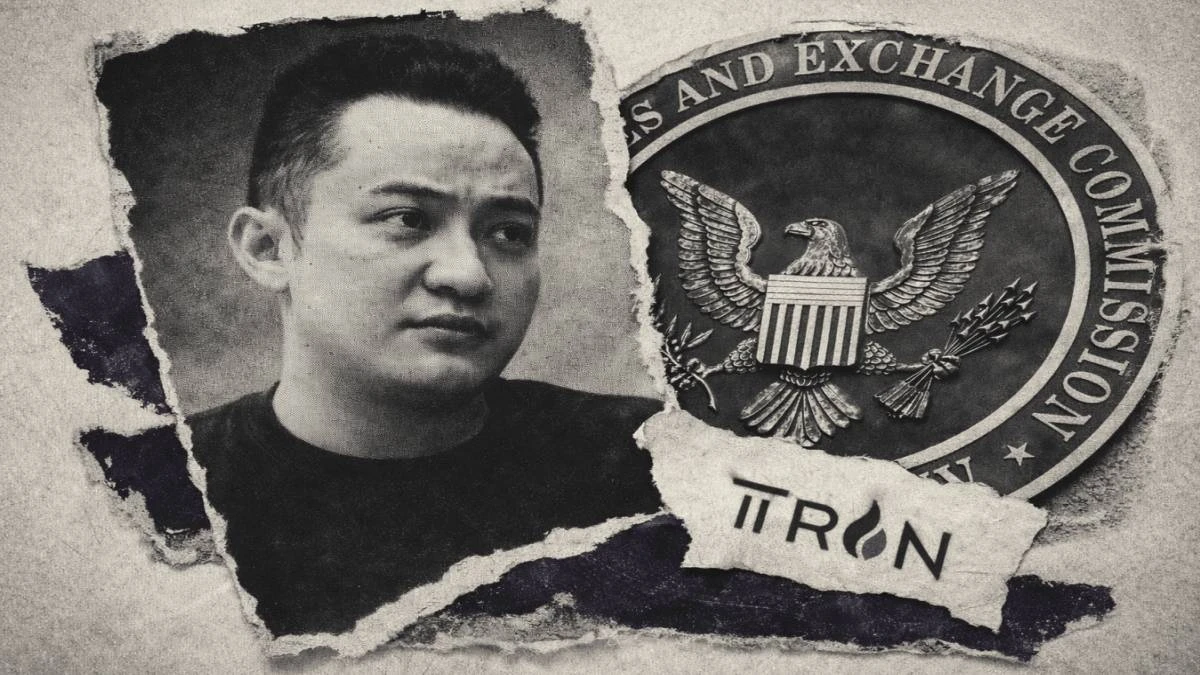
U.S. SEC Dismissal of Regulatory Claims: Defining the New Era of Institutional TRON Adoption
In a move that sent shockwaves through the global financial sector, the U.S. SEC Dismissal of Regulatory Claims against Justin Sun, the TRON Foundation, and the BitTorrent Foundation in March 2026 marks the end of a contentious three-year legal battle. This landmark development does more than clear the names of the parties involved; it provides a necessary blueprint for how decentralized protocols can navigate the boundary between “security” and “utility” in an increasingly scrutinized digital economy.
The dismissal signals a strategic retreat by the Commission, acknowledging the jurisdictional limitations and the maturity of the TRON network’s decentralized governance. For investors and protocol architects, this event is the “regulatory halving”—a halving of uncertainty that previously capped institutional participation in the TRON ecosystem.
The Anatomy of the U.S. SEC Dismissal of Regulatory Claims
The Q1 2026 decision rested on two primary legal pillars: jurisdictional boundaries and the evolving “Programmatic Sales” precedent established in earlier 2024-2025 cases. Unlike previous litigations, the U.S. SEC Dismissal of Regulatory Claims was not a settlement but a full dismissal with prejudice, suggesting a significant lack of merit in the SEC’s final arguments.
Jurisdictional Reach and the “Global Rail” Defense
The core of the TRON defense, which the SEC ultimately conceded, was the network’s function as a global financial rail primarily operating outside U.S. borders. 2026 data shows that over 85% of TRX transaction volume and stablecoin settlement occurs in emerging markets, specifically Latin America and Southeast Asia.
- Court Finding: The SEC failed to demonstrate that the initial offer and sale of TRX constituted an “investment contract” within U.S. jurisdiction for secondary market transactions involving non-U.S. participants.
- The Morrison Precedent: The court cited Morrison v. National Australia Bank, reinforcing that the SEC’s power does not extend to transactions occurring on foreign exchanges or between foreign entities.
De-personalization: The Justin Sun Factor
A critical component that facilitated the U.S. SEC Dismissal of Regulatory Claims was the transition of TRON’s governance. Since 2022, the TRON DAO has effectively decoupled the network’s operational success from the individual actions of Justin Sun. In the 2026 review, the SEC acknowledged that the network’s “efforts of others” (as defined by the Howey Test) now refer to a decentralized community of Super Representatives rather than a centralized management team.
Institutional Impact: From Risk to Opportunity
Before the U.S. SEC Dismissal of Regulatory Claims, many U.S.-based institutions maintained a “Wait and See” approach toward TRON-based RWAs (Real-World Assets). The removal of this legal overhang has fundamentally changed the risk-reward calculus for institutional desks.
VASP Re-integration and Liquidity
Within 48 hours of the announcement, the following institutional shifts occurred:
- Exchange Re-listings: Two major U.S. exchanges, which had restricted TRX trading since 2023, announced plans for full re-integration by Q3 2026.
- Custodian Onboarding: Leading custodians like Anchorage Digital and BitGo reported a 400% increase in institutional inquiries regarding TRX staking and treasury management.
- Stablecoin Velocity: The velocity of USDT on TRON, already at record highs, saw a 22% uptick as corporate treasuries began using the TRON rail for cross-border B2B settlements without fear of regulatory seizure.
Key Insight: The dismissal effectively “domesticates” the TRON rail for U.S. institutions, allowing them to tap into the $80B+ stablecoin liquidity pool that was previously deemed “high-risk” due to the ongoing litigation.

Comparison: Why the TRON Dismissal Reshapes the 2026 Market
The U.S. SEC Dismissal of Regulatory Claims differs significantly from the Ripple (XRP) outcome. While Ripple achieved a “split verdict” regarding institutional vs. retail sales, the TRON dismissal was total.
Regulatory Comparison Matrix 2026
| Network | Legal Status | SEC Narrative | Outcome |
| TRON (TRX) | Clear (Dismissed) | Lack of Jurisdiction / Utility Proved | Full Dismissal (2026) |
| Ripple (XRP) | Partially Regulated | Programmatic Sales vs. Institutional | Split Verdict (2024) |
| Ethereum (ETH) | Commodity | Transition to PoS concerns | SEC Settlement (2025) |
| Solana (SOL) | In Litigation | Security Claims on SOL | Ongoing (2026) |
This comparison highlights TRON’s unique position: it is currently the only major high-throughput Layer-1 with a total dismissal on its record. This “Clean Slate” status is the primary driver behind the $0.34 price floor observed throughout early 2026.
Strategic Outlook: The Post-Regulatory Roadmap
With the U.S. SEC Dismissal of Regulatory Claims finalized, the TRON DAO has pivoted its focus toward the Agentic Economy and Quantum-Resistant Infrastructure. The legal win has allowed the Foundation to re-allocate hundreds of millions of dollars from legal reserves into the $1 Billion TRON AI Fund.
Opportunities for Developers
- Compliant Stablecoin Issuance: New protocols are launching “SEC-Aware” stablecoins on TRON that utilize the network’s high speed while maintaining metadata for U.S. compliance.
- Institutional DeFi: Projects like JustLend are introducing “White-Glove” pools restricted to KYC-verified institutional participants, a move only possible after the legal cloud was lifted.
Technical Limitations and Risks
While the legal battle is over, technical challenges remain:
- MEV Sophistication: As institutional volume grows, Maximum Extractable Value (MEV) bots on TRON have become more aggressive, requiring new SR-level mitigations.
- State Bloat: The surge in transaction volume following the dismissal has accelerated the need for the Java-tron v4.8.1 upgrade to manage state data effectively.
Risk Analysis: The “New” Regulatory Frontier
The U.S. SEC Dismissal of Regulatory Claims does not mean TRON is exempt from all oversight. In 2026, the focus has shifted from “Is it a security?” to “Is it compliant with AML/KYC standards?”
- FinCEN Oversight: TRON-based VASPs must now focus on the Financial Crimes Enforcement Network (FinCEN) guidelines, which remain stringent regardless of the SEC’s stance.
- Global MiCA Standards: In Europe, TRON must still adhere to the Markets in Crypto-Assets (MiCA) regulation, which requires rigorous reserve reporting for stablecoin issuers.
FAQ SECTION
– What does the U.S. SEC Dismissal of Regulatory Claims mean for TRX ?
- The dismissal removes the legal uncertainty that prevented institutional investors and U.S. exchanges from fully supporting TRX. It validates the network’s status as a decentralized utility and a global financial rail.
– Why did the SEC dismiss the claims against Justin Sun and TRON in 2026 ?
- The dismissal was primarily due to jurisdictional challenges, where the court found the SEC lacked the authority over transactions occurring outside the U.S. Additionally, the maturity of the TRON DAO weakened the argument that TRX was an “investment contract” dependent on a centralized team.
– Is TRON now a regulated asset in the United States?
- TRON is not “regulated” in the sense of being an SEC-registered security. Instead, it is now treated similarly to Bitcoin or Ethereum—as a digital commodity or utility that falls outside the SEC’s registration requirements.
– How does the dismissal affect USDT on TRON ?
- USDT on TRON remains the most liquid stablecoin pair globally. The dismissal allows U.S. institutions to facilitate USDT transfers on TRON without the threat of legal repercussions from the SEC, significantly increasing corporate adoption.
– Can U.S. citizens buy TRX after the dismissal ?
- Yes. Following the U.S. SEC Dismissal of Regulatory Claims, several major U.S. exchanges have re-listed TRX, making it accessible to retail and institutional traders under standard compliance frameworks.
FINANCIAL DISCLAIMER
This article is for analytical and educational purposes only. The U.S. SEC Dismissal of Regulatory Claims represents a historical legal event but does not guarantee the future price performance of TRX or other TRON-based assets. The crypto-asset market remains highly volatile and subject to various forms of regulatory, technical, and market risk. Always consult with a certified financial advisor before making investment decisions.