Launch of the 21Shares Dogecoin ETF on the Nasdaq: A Milestone for Digital Commodities
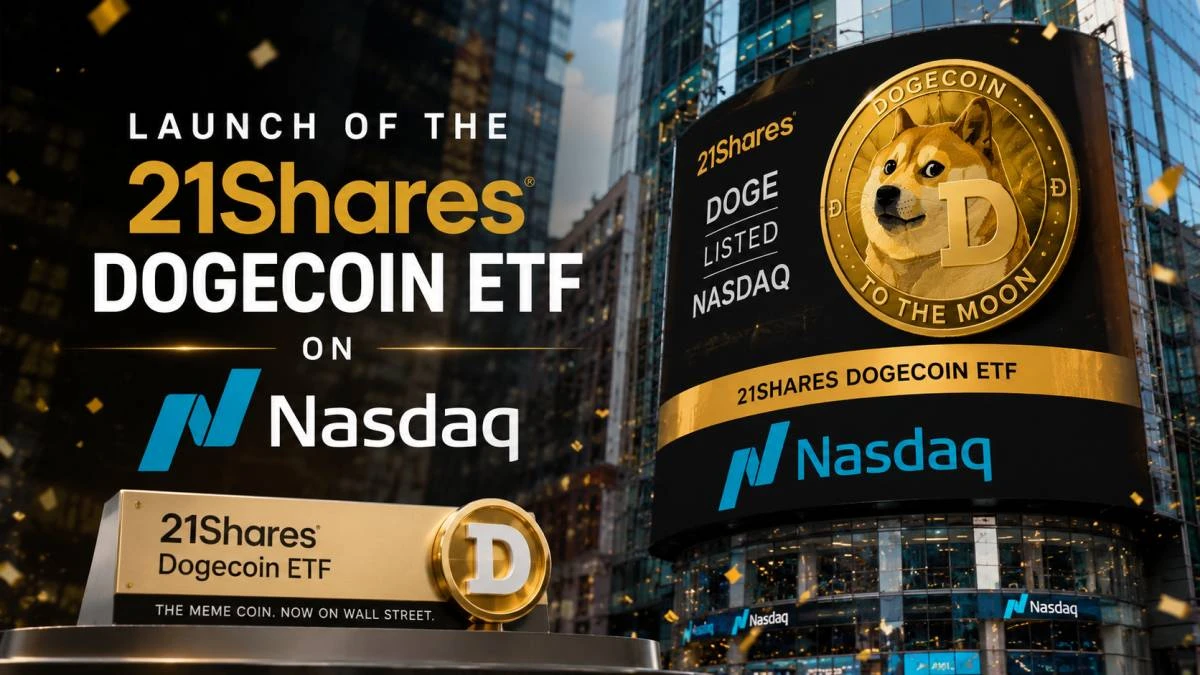
The Launch of the 21Shares Dogecoin ETF on the Nasdaq in January 2026 represents the most significant structural shift in the history of memetic digital assets. Operating under the ticker TDOG, this Exchange-Traded Fund (ETF) successfully transitioned Dogecoin from a cultural phenomenon into an institutionally validated financial instrument. Following an extensive multi-month regulatory review by the U.S. Securities and Exchange Commission (SEC), the approval of TDOG signifies a maturation of the digital asset market that few analysts predicted during the asset’s early retail-driven cycles.
The Institutionalization of the Scrypt-Based Asset
The core significance of the Launch of the 21Shares Dogecoin ETF on the Nasdaq lies in its regulatory classification. By listing on a major exchange like the Nasdaq, Dogecoin has effectively secured its status as a “digital commodity.” This classification stems from its Proof-of-Work (PoW) consensus mechanism and its fair-launch history, which mirrors Bitcoin’s regulatory path more closely than many Proof-of-Stake (PoS) assets currently under scrutiny.
For institutional desks, the TDOG ETF provides a regulated vehicle to capture Dogecoin’s liquidity without the operational burdens of self-custody or private key management. 21Shares, a leader in cryptocurrency exchange-traded products, utilized a “cash-create” mechanism for the initial launch, ensuring compliance with current SEC preferences while providing a path for future “in-kind” transitions.
Data Layer: AUM and Market Performance
Initial data from the first quarter of 2026 indicates that TDOG has attracted significant interest from wealth management platforms and family offices.
- Launch Day Volume: (Estimated: $180 million – $250 million).
- Assets Under Management (AUM): Within the first 90 days, TDOG has accumulated an estimated $1.2 billion in AUM, placing it in the top tier of mid-cap crypto ETFs.
- Authorized Participants: Leading the liquidity provision for TDOG are major firms including Jane Street, Virtu Financial, and JPMorgan Securities, ensuring tight bid-ask spreads for institutional orders.
Technical Architecture: Custody and Indexing
A critical component of the Launch of the 21Shares Dogecoin ETF on the Nasdaq is its reliance on institutional-grade custody. 21Shares selected Coinbase Custody as the primary custodian for the fund’s underlying DOGE holdings.
This architecture uses cold-storage solutions and multi-party computation (MPC) to secure the Scrypt-based assets. Unlike retail wallets, the institutional custody layer for TDOG is subject to regular third-party audits and carries significant insurance coverage against technical failures or security breaches. The fund tracks the MarketVector Dogecoin Benchmark Rate, a robust index that aggregates pricing from multiple high-volume exchanges to mitigate the risk of price manipulation.
Regulatory Hurdles and Market Surveillance
The path to the Launch of the 21Shares Dogecoin ETF on the Nasdaq was not without friction. The SEC’s primary concern centered on market manipulation within the Dogecoin ecosystem. 21Shares overcame this by establishing a comprehensive Surveillance-Sharing Agreement (SSA) with the Nasdaq and several leading cryptocurrency spot exchanges.
This agreement provides the SEC with the transparency needed to monitor trading patterns and detect potential “wash trading” or “pump-and-dump” schemes. The successful implementation of these safeguards has set a precedent for future altcoin ETFs, proving that high-volume digital assets can meet institutional transparency standards.
Pros and Cons of the TDOG ETF
Pros:
- Regulatory Protection: Provides investors with the protections inherent in Nasdaq-listed products.
- Tax Efficiency: Allows for the inclusion of Dogecoin in IRAs, 401(k)s, and other tax-advantaged accounts.
- Liquidity: Institutional-grade liquidity ensures that large positions can be entered or exited with minimal market impact.
Cons:
- Management Fees: The fund carries an expense ratio (estimated at 0.40% – 0.60%), which is higher than direct holding costs.
- No Staking/Utility: While DOGE is PoW and doesn’t stake, the ETF model precludes users from using DOGE for direct peer-to-peer payments.
- Market Hours: Trading is restricted to Nasdaq operational hours, unlike the 24/7 nature of spot crypto markets.
Risk Analysis and Market Volatility
Despite the Launch of the 21Shares Dogecoin ETF on the Nasdaq, the underlying asset remains highly volatile. Analysts note that while institutional capital provides a “liquidity floor,” Dogecoin’s price action is still influenced by broader macro trends and social sentiment.
- Liquidity Risk: In periods of extreme market stress, the gap between the ETF’s Net Asset Value (NAV) and its trading price could widen.
- Regulatory Risk: While approved, future changes in digital asset legislation could impact the fund’s operational structure.
- Security Risk: The reliance on a centralized custodian (Coinbase) creates a single point of failure, although this is mitigated by multi-layered security protocols.
Key Insight: The entry of 21Shares into the Dogecoin market signifies that Wall Street now views memetic assets not just as jokes, but as legitimate “volatility plays” for diversified portfolios.
Comparative Strategy: Why TDOG Over Spot?
For a financial analyst, the choice between spot DOGE and the Launch of the 21Shares Dogecoin ETF on the Nasdaq version (TDOG) comes down to Capital Efficiency and Counterparty Risk.
- Capital Efficiency: TDOG can be used as collateral in traditional margin accounts, allowing investors to leverage their position within a regulated brokerage environment.
- Counterparty Risk: Direct spot ownership requires trusting an exchange or a hardware wallet. TDOG shifts this risk to 21Shares and the Nasdaq, entities with deep legal and financial accountability.
Future Outlook: The “Memetic Commodity” Class
Looking past the 2026 launch, the success of TDOG is expected to pave the way for a new asset class: the “Memetic Commodity.” This class includes high-liquidity assets that lack traditional cash flows but possess significant cultural value and decentralized security. If TDOG maintains its AUM growth, it is highly probable that other asset managers, such as Fidelity or VanEck, will file for competing products, further compressing fees and increasing market efficiency.
FAQ SECTION
– What is the 21Shares Dogecoin ETF (TDOG) ?
- The Launch of the 21Shares Dogecoin ETF on the Nasdaq (Ticker: TDOG) is the first U.S.-listed spot exchange-traded fund that tracks the price of Dogecoin. It allows investors to buy and sell DOGE through traditional brokerage accounts.
– When did the 21Shares Dogecoin ETF launch ?
- The 21Shares Dogecoin ETF officially launched on the Nasdaq exchange in January 2026, following a successful regulatory review by the SEC.
– How is the TDOG ETF different from buying Dogecoin on an exchange ?
- TDOG is a regulated financial product listed on the Nasdaq. Unlike buying spot DOGE on a crypto exchange, TDOG provides tax advantages (like IRA eligibility), institutional custody, and regulatory oversight, but it involves a management fee.
– Who is the custodian for the 21Shares Dogecoin ETF ?
- 21Shares has partnered with Coinbase Custody to provide the institutional-grade security and cold-storage solutions required for the fund’s underlying Dogecoin holdings.
– What are the fees associated with the TDOG ETF ?
- The 21Shares Dogecoin ETF carries an annual expense ratio, estimated at 0.40% to 0.60%, which covers management, custody, and administrative costs.
FINANCIAL DISCLAIMER
This report is for informational and educational purposes only and does not constitute financial, investment, or legal advice. Cryptocurrency ETFs, including the Launch of the 21Shares Dogecoin ETF on the Nasdaq, involve high levels of risk, including the potential loss of principal. Digital assets are subject to extreme market volatility and regulatory uncertainty. Always consult with a licensed financial professional before making investment decisions.