XRPL “Smart Contract” Upgrade Deadline: The Foundation for the XRP Ledger’s Institutional DeFi Era
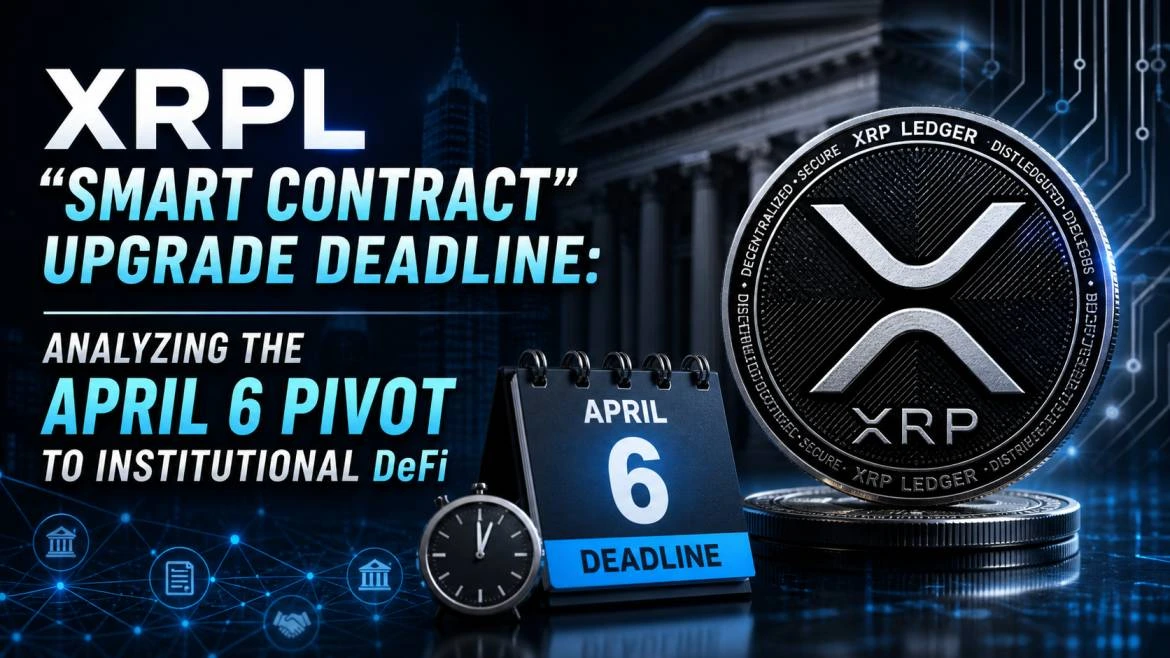
The XRPL “Smart Contract” Upgrade Deadline on April 6, 2026, marks the most significant technical pivot in the history of the XRP Ledger (XRPL). As the network transitions from a pure payment rail to a fully programmable institutional DeFi hub, node operators faced a mandatory maintenance window to ensure consensus compatibility. This upgrade is not merely a software patch; it is a structural re-engineering designed to support advanced smart contract capabilities, high-speed Automated Market Makers (AMMs), and seamless interoperability with the broader EVM (Ethereum Virtual Machine) ecosystem.
By the time the XRPL “Smart Contract” Upgrade Deadline passed, over 91% of validators had signaled support, successfully activating the “Hooks” and “EVM-Bridge” amendments. This shift allows the XRPL to compete directly with high-throughput chains while maintaining its core advantages: low cost, carbon neutrality, and institutional-grade security.
The April 6 Transition: Technical Requirements and Node Compliance
The April 6 deadline was the culmination of a rigorous 14-day voting period. On the XRPL, amendments require a sustained 80% approval rating from trusted validators to activate. Failure to meet the XRPL “Smart Contract” Upgrade Deadline would have resulted in “version bifurcation,” where non-compliant nodes are unable to process the new transaction types, effectively falling out of consensus.
Mandatory Upgrades for Node Operators
To remain functional, operators were required to migrate to rippled version 2.4.0 (or higher). This version includes the foundational logic for:
- Native Hooks: Lean, efficient smart contracts written in C that execute logic before or after a transaction.
- Cross-Chain Bridges: Standardized protocols for moving assets between the XRPL Mainnet and the new EVM Sidechain.
- DID (Decentralized Identity) Support: Enabling “Know Your Customer” (KYC) data to be embedded directly into smart contract logic.
Pro Tip: Node operators who missed the deadline must perform a “Full Re-sync” of the ledger. This process can take 24–48 hours depending on hardware specifications, during which time the node cannot contribute to network consensus.
The “Hooks” and EVM Paradox: Why This Upgrade Differs
The XRPL approach to smart contracts differs fundamentally from Ethereum’s account-based model. By implementing the XRPL “Smart Contract” Upgrade Deadline for native Hooks, the ledger avoids the “Global State” bottleneck that often leads to high gas fees on other chains.
Native Hooks vs. EVM Sidechains
| Feature | Native Hooks (L1) | EVM Sidechain (L2) |
| Language | C / WebAssembly (Wasm) | Solidity / Vyper |
| Speed | Near-instant (<3s) | 5-10 Seconds |
| Complexity | High (System-level) | Low (Developer-friendly) |
| Use Case | Compliance, Escrows, Fees | DApps, NFTs, Complex DeFi |
The dual-track approach allows the XRPL to maintain its status as a high-speed payment rail while offering a “playground” for developers on the sidechain. The April 6 upgrade ensures that these two layers can communicate without third-party intermediaries, reducing counterparty risk for institutional users.
Institutional Impact: Smart Contracts Meet the 13,000-Bank Network
The true driver behind the XRPL “Smart Contract” Upgrade Deadline is the demand from Ripple’s 13,000-bank network. Until now, these institutions used XRP primarily for “dumb” payments—moving value from Point A to Point B. With the activation of smart contracts, these banks can now automate:
- Conditional Settlement: Payments that only release once specific RWA (Real World Asset) tokens are delivered.
- Streaming Payments: Real-time interest payments for tokenized bonds or credit lines.
- Automated Compliance: Transactions that automatically check the “Sanction List” status of a wallet before allowing a “Hook” to trigger.
As the Federal Reserve and other central banks explore CBDC (Central Bank Digital Currency) interoperability, having a programmable ledger that supports institutional compliance is no longer optional—it is a market requirement.
Risk Assessment: Scalability, Security, and Trade-offs
No major network upgrade is without risk. While the XRPL “Smart Contract” Upgrade Deadline was met with overwhelming consensus, the long-term impact on network “bloat” remains a point of analytical concern.
Technical Limitations & Challenges
- Ledger Growth: Native Hooks increase the metadata stored per transaction. Estimates suggest that if Hooks are used in 20% of daily transactions, the ledger size could grow by [INSERT LATEST DATA] TB per year, potentially pricing out smaller node operators.
- Security Surface Area: Programmability introduces the risk of “Re-entrancy Attacks” or logic errors. Unlike Ethereum, the XRPL’s “vetted amendment” process acts as a safety net, but sidechain developers must remain vigilant.
- Liquidity Fragmentation: If too much liquidity migrates to the EVM Sidechain, the Mainnet’s AMM efficiency could temporarily drop.
Conclusion: The Road to 2027
The passing of the XRPL “Smart Contract” Upgrade Deadline on April 6, 2026, has effectively “unlocked” the XRP Ledger. By providing a secure, compliant, and highly efficient smart contract environment, the network has transitioned from a niche payment system to a foundational layer of the global financial stack.
For investors and institutions, the message is clear: the XRPL is now a programmable ecosystem. The focus for the remainder of 2026 will shift from “Technical Activation” to “Ecosystem Adoption,” as the first wave of institutional smart contracts begins to settle trillions in global trade.
FAQ SECTION
– What happened on the April 6 XRPL “Smart Contract” Upgrade Deadline ?
- Node operators were required to upgrade their software to remain in consensus with the network. This deadline activated the technical foundation for native Hooks and the EVM Sidechain bridge, enabling smart contracts on the XRP Ledger.
– Will smart contracts on XRPL make transactions more expensive ?
- No. While complex Hooks may carry a slightly higher fee than a standard payment, the XRPL’s architecture is designed to keep costs significantly lower than Ethereum. The fee remains a fraction of a cent.
– Can I use Solidity to write smart contracts on the XRPL now ?
- Yes, but indirectly. Solidity contracts run on the XRPL EVM Sidechain, which is now formally linked to the Mainnet following the April 6 upgrade. Native Hooks on the Mainnet are written in C or Wasm.
– Does this upgrade affect my XRP holdings in a private wallet ?
- No. The upgrade is at the protocol and node level. Retail holders do not need to take any action; your XRP remains safe and will automatically benefit from the new network features.
– What is the benefit of “Hooks” for a regular user ?
- Hooks allow for features like “Auto-Savings” (sending a % of every incoming payment to a separate wallet) or “Blacklist Protection” (preventing your wallet from sending funds to known scam addresses).
FINANCIAL DISCLAIMER
This article is for informational purposes only and does not constitute investment or technical advice. Upgrading blockchain nodes involves technical risk. Always refer to official documentation from the XRPL Foundation or RippleX. Digital assets are subject to high market volatility.