The Self-Custody Pivot: Tether Wallet Gives Users Direct Control Over USDT and Bitcoin
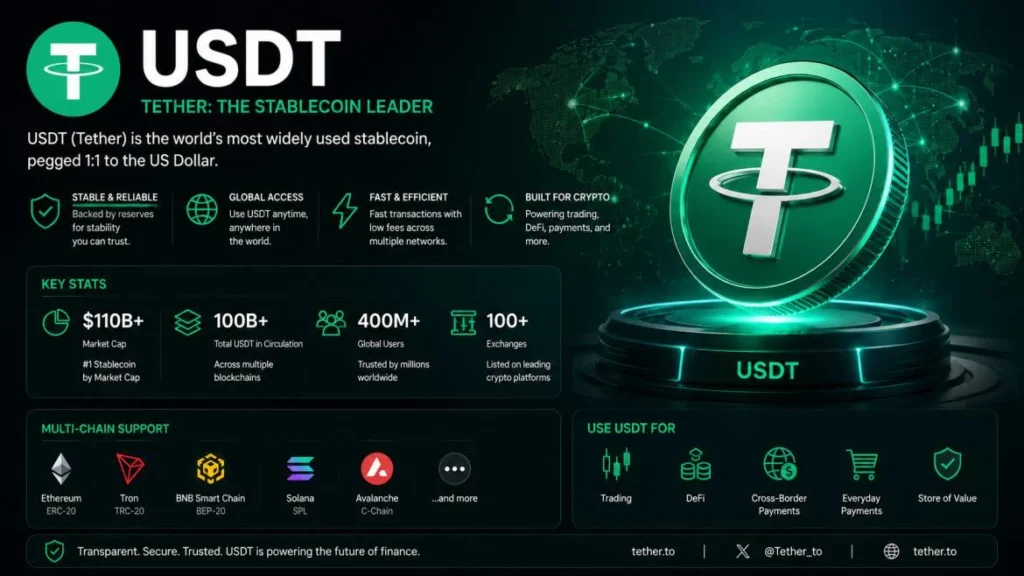
The launch of the consumer-facing tether.wallet application confirms that Tether Wallet Gives Users Direct Control Over USDT and Bitcoin, fundamentally altering the company’s position within the global financial architecture. For more than a decade, Tether operated almost exclusively as a backend systemic engine. It served as the primary settlement pipeline for global crypto liquidity, growing its primary dollar-pegged asset, USDT, to a market capitalization of $185 billion. Yet, despite entering the financial lives of an estimated 570 million individuals via third-party exchanges and payment networks, Tether lacked a direct client interface.
The introduction of this self-custodial gateway changes the competitive dynamics of retail crypto payments. By shifting from a raw liquidity network to an elite, consumer-facing software layer, Tether is capturing the full value chain from token issuance to the user interface. This analysis decomposes the technical, strategic, and macro-economic components of this infrastructure deployment.
Dissecting the Architecture: How Tether Wallet Gives Users Direct Control Over USDT and Bitcoin
At its operational foundation, the application functions via a non-custodial framework where client-side cryptography dictates asset control. The core value proposition—that the Tether Wallet Gives Users Direct Control Over USDT and Bitcoin—is achieved by executing all transaction-signing procedures locally on the hardware of the user’s device.
- User Device (Local): Private Keys -> Local Transaction Signing -> App UX
- Network Path: Signed Payload Broadcasted to Multi-Chain Network Layer
- Settlement Destination: Bitcoin Mainnet / Lightning Network or Ethereum / L2 Rollups
Unlike custodial setups deployed by centralized digital asset platforms, private keys never transit to an external server. The structural architecture excludes intermediaries, meaning no clearinghouses, brokerage desks, or third-party storage managers retain access rights.
To address the recovery vulnerabilities that traditionally limit consumer self-custody, Tether implemented a hybrid storage protocol. The security engine splits security dependencies across two isolated horizons:
- Local Encryption Generation: The device client calculates an isolated encryption master key upon configuration.
- Cloud Shard Distribution: The core wallet data payload is encrypted locally and transferred to Tether’s network infrastructure. Concurrently, the corresponding cryptographic decryption key is backed up within the user’s isolated personal cloud storage environment (such as Apple iCloud or Google Drive).
This approach mitigates single-point-of-failure risks. Tether maintains the encrypted system data but lacks the key required to read or alter it. Conversely, the personal cloud repository stores the key file but contains zero access to the underlying portfolio ledger. The elements only reconcile directly on the user’s authenticated physical interface, ensuring true sovereign asset management without sacrificing recovery safety.
Breaking the UX Ceiling: Gasless Transactions and Human-Readable Names
Historically, non-custodial software experienced high user churn due to structural frictions inherent to public ledger infrastructure. Tether directly targets these bottlenecks by introducing native protocol-level abstractions.
In-Asset Transaction Fee Settlement
On conventional decentralized apps, moving a stablecoin requires the user to hold the native utility token of that specific blockchain to cover gas costs (e.g., holding ETH to transfer USDT on the Ethereum mainnet). This prerequisite creates friction for mainstream adoption.
The tether.wallet platform integrates native gas abstraction protocols, allowing users to settle transaction costs directly in the asset being transferred. If a user initiates a transfer of USDT, the settlement network processes the network fee in USDT, abstracting away the underlying Layer-1 or Layer-2 gas management entirely.
Humanization of Network Destinations
To minimize entry errors and execution stress, the software maps intricate, 42-character hexadecimal public addresses to structured, human-readable identifiers formatted as name@tether.me.
- Legacy Engine:
0x71C...3A9f(High friction, high execution risk) - Tether Identity Layer:
liquidity@tether.me(Human-readable, instant routing)
This destination system interfaces with LNURL-enabled networks and EVM smart contracts, allowing users to move capital across different networks using simple identity strings instead of error-prone copy-pasting.
The Asset Portfolio Optimization: Why Bitcoin, USAT, and Gold Matter
The application features a curated collection of four primary assets: USDT, USAT, XAUT, and Bitcoin. Management characterized this narrow scope as an intentional decision to focus on core financial instruments.
| Asset Ticker | Asset Classification | Primary Network Rails | Strategic Function |
| USDT | Global Digital Dollar | Ethereum, Polygon, Arbitrum, Plasma | High-liquidity cross-border settlement |
| USAT | Regulated US Digital Dollar | Ethereum | Compliance-first domestic dollar access |
| XAUT | Tokenized Physical Gold | Ethereum, Polygon, Arbitrum | Inflation protection and sound money backing |
| BTC | Sovereign Digital Commodity | Bitcoin Mainnet, Lightning Network | Long-term store of value and microtransactions |
The addition of USAT highlights Tether’s evolving regulatory strategy. Launched under the compliance protections of the GENIUS Act and issued in tandem with Anchorage Digital Bank, USAT gives Tether a compliant, regulated option inside the United States market. This structural design lets Tether compete directly for onshore institutional capital, a segment historically dominated by Circle’s USDC.
Furthermore, integrating XAUT (Tether Gold) alongside Bitcoin and stable dollars gives users a balanced choice of liquid digital assets. By offering access to both hard commodities and cash-equivalent instruments within a unified interface, the platform serves as a versatile financial toolkit for users cut off from traditional banking options.
The AI Layer: WDK, Machine-to-Machine Payments, and Autonomous Agents
Beyond serving retail users, the architectural design of tether.wallet is engineered for automated, software-driven economic ecosystems. The platform is constructed entirely upon Tether’s open-source Wallet Development Kit (WDK), a highly modular framework built to handle machine-to-machine financial settlements.
CEO Paolo Ardoino has consistently noted that autonomous AI agents require a native financial infrastructure to manage resources independently, free from legacy banking limits. The WDK addresses this market by enabling programmatic self-custody for AI models.
By integrating the Model Context Protocol (MCP) toolkit, developers can build local-first AI setups where independent agents execute financial transactions directly. This design supports machine-to-machine micropayments over the Bitcoin Lightning Network infrastructure, unlocking real-time data purchasing, automated hardware resource allocation, and independent software operations without human clearing delays.
Strategic Analysis: Structural Risk Matrix, Pros, and Cons
While this consumer deployment lowers technical barriers to entry, an elite financial assessment requires weighing its clear operational advantages against its potential structural trade-offs.
Systemic Advantages (The Pros)
- Elimination of Gas Token Friction: Retaining native assets simply to fund gas fees is no longer necessary. Portfolio management is streamlined by allowing transactions to run purely on stablecoins.
- Enhanced Address Safety: Replacing complex public keys with
name@tether.meidentifiers significantly reduces user error and accidental asset loss. - True Sovereignty Over Liquidity: Moving users away from centralized exchanges into client-side signed self-custody mitigates systemic counterparty risks, protecting users from platform insolvencies.
Strategic Trade-Offs (The Cons)
- Concentration of Infrastructure: While the underlying private keys are completely distributed, relying heavily on Tether’s communication relays and identity mapping databases introduces potential centralization vectors if those networks experience downtime.
- Network Constraint Realities: Asset distribution is limited to four selected tokens. Investors looking for broad exposure to alternative layer-1 assets or decentralized finance protocols must continue to use alternative wallet ecosystems.
Regulatory and Structural Counterparty Risks
Operating a consumer-facing payment interface brings unique regulatory considerations. Although client-side signature collection prevents Tether from freezing assets directly on the user’s local device, the smart contract layer of USDT and USAT still contains standard corporate blacklist features.
Additionally, as major jurisdictions implement stricter rules—such as Europe’s MiCA framework and evolving stablecoin oversight in the United States—the identity mapping systems (name@tether.me) could face closer compliance review from financial regulators.
Visual & Engagement Strategy: Market Comparison Matrix
To put this launch into perspective, the table below highlights how Tether’s consumer wallet compares to established alternatives across the digital asset market.
| Functional Capabilities | Tether Wallet (tether.wallet) | MetaMask | Coinbase Wallet | Phantom |
| Custodial Model | Non-Custodial (Local) | Non-Custodial (Local) | Non-Custodial (Local) | Non-Custodial (Local) |
| Native Fee Abstraction | Yes (Pay in sent asset) | No (Requires L1 gas) | Selective (Base L2) | No (Requires SOL/ETH) |
| Identity Resolution | Built-in (@tether.me) | Third-Party (ENS) | Web2 Handles | Third-Party (SNS) |
| AI Agent Readiness | Native (WDK / MCP Kit) | Limited | Limited | Experimental |
| Primary Target Market | Unbanked Global & AI Agents | Web3 / DeFi Power Users | Retail Onshore Usability | Multi-Chain Retail Users |
The Market Outlook: Bypassing the Traditional Financial System
The broader strategy behind this rollout extends beyond simple product diversification. By putting an intuitive self-custodial app directly into the hands of global users, Tether is positioning itself as a consumer-facing alternative to legacy payment networks, rather than just an asset issuer.
By removing the complexities of gas tokens and long public addresses, Tether is tackling the user experience hurdles that have historically slowed the adoption of decentralized payments. Combined with institutional steps like moving to full financial audits with KPMG and launching compliant vehicles like USAT, Tether is building a comprehensive, vertical financial system. This stack is designed to connect global retail users, institutional players, and autonomous machines within a unified, independent infrastructure.
FAQ
-How does the Tether Wallet give users direct control over USDT and Bitcoin?
- The
tether.walletplatform is built on a non-custodial framework where private cryptographic keys are generated and held locally on the user’s device. Every transaction is compiled and signed client-side, ensuring that third-party custodians, exchanges, or Tether itself cannot access, freeze, or alter your funds.
-What assets are supported in the initial release of the Tether Wallet?
- The platform supports four primary digital assets: USDT (the leading global digital dollar), USAT (a federally regulated, compliant digital dollar tailored for the United States market), XAUT (tokenized physical gold), and Bitcoin (BTC).
-How do gasless payments work within the application?
- The application integrates advanced gas abstraction systems. Users do not need to hold a blockchain’s native utility token (like ETH or MATIC) to pay for network transactions. Instead, transaction fees are settled directly using the asset being sent, streamlining the overall user experience.
-What are human-readable identifiers on the network?
- Human-readable identifiers replace long, complicated hexadecimal wallet addresses with a clean, simple text format:
name@tether.me. This naming service simplifies cross-border transfers and reduces the risk of entering an incorrect destination address.
-Can AI agents and automated software tools use this wallet?
- Yes. The wallet is built using Tether’s open-source Wallet Development Kit (WDK), which includes native support for automated systems. Developers can connect these tools with Model Context Protocol (MCP) toolkits, enabling independent AI agents to safely manage assets and handle machine-to-machine payments.
-Which blockchain networks are currently supported?
- The app runs across multiple top-tier network infrastructures. For stable assets and gold, it supports Ethereum, Polygon, Arbitrum, and Plasma networks. For Bitcoin, it supports both the traditional base mainnet and the Layer-2 Lightning Network for fast, low-fee micropayments.
FINANCIAL DISCLAIMER :This article is provided for informational and analytical purposes only. It does not constitute financial, investment, legal, or regulatory advice. Digital assets, stablecoins, and self-custodial software carry unique operational, technical, and market risks, including the total loss of capital. Readers should perform their own thorough research and consult with qualified professionals before making any financial decisions.