
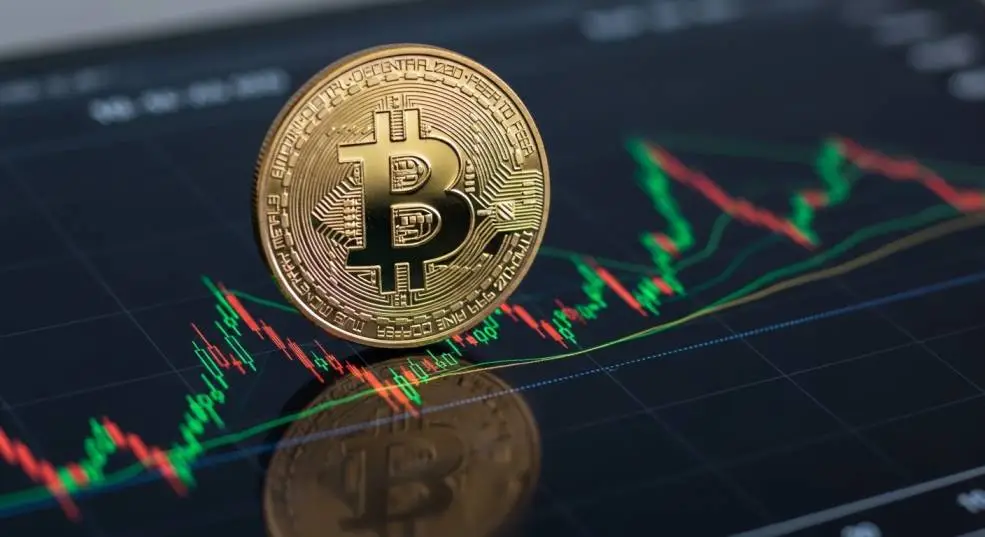
Bitcoin Breaks Below $76,000: AI Sector Rotation and Geopolitical Heat Triggers Market Deleveraging
The Bitcoin tape is flashing red as the digital asset slipped to $75,842 (as of April 29, 2026), marking a critical departure from the $78,000 stability zone held earlier this month. The decline isn’t an isolated event; it represents a confluence of sector-wide tech anxiety, renewed Middle East escalations, and a defensive posture ahead of the “Super Week” of central bank decisions.
The AI Sector “Vortex”: Why Silicon Valley Volatility is Bleeding into BTC
For much of early 2026, Bitcoin moved in lockstep with high-growth AI stocks. However, as the AI sector faces a structural valuation reset—driven by tightening regulations and earnings normalization—Bitcoin is losing its “beta” appeal.
Traders are witnessing a Liquidity Vortex. Capital that flowed into Bitcoin as a proxy for technological progress is rotating back into “safe-haven” cash or defensive equities as AI giants face antitrust headwinds in the EU and US.
- Institutional De-risking: Systematic trading desks are slashing exposure across “high-variance” assets. When Nvidia or OpenAI-linked tokens stumble, Bitcoin often serves as the liquidity provider—the asset traders sell first to cover margins elsewhere.
The Geopolitical Trigger: Iran Jitters and the “Liquidity Trap”
The headlines out of the Middle East have shifted from “contained” to “volatile.” Renewed tensions involving Iran have historically sent Bitcoin in two directions: initially down as a risk-asset liquidation, followed by a slow recovery as a “digital gold” alternative.
Currently, we are in the Liquidation Phase.
- The Iran-Israel Friction: Reports of military posturing in the Strait of Hormuz have pushed oil prices .
- Risk-Off Dominance: In a high-inflation 2026 environment, energy price spikes act as a tax on liquidity. Institutional desks are shifting to “Risk-Off” mode, favoring gold and short-term Treasuries over digital stores of value until the kinetic risk stabilizes.
Pro-Tip: Watch the Gold/BTC ratio. When gold outperforms BTC during geopolitical stress, it indicates that the market still views Bitcoin as a “Risk-On” asset rather than a pure safe-haven.
Central Bank Deadlock: The Fed and ECB “Higher for Longer” Narrative
The most significant weight on the market remains the looming central bank decisions. The Federal Reserve, facing a persistent “last mile” inflation problem in 2026.
Why the $76k Break Matters
Bitcoin’s move below $76,000 has triggered a structural break in the 50-day Exponential Moving Average (EMA).
- The Fed Factor: Investors are pricing in a “Hawkish Hold.” Any signal from Chair Powell that rate cuts are off the table for the remainder of 2026 will likely test the $72,500 support floor.
- The ECB Pivot: Conversely, if the ECB diverges and cuts rates earlier to stave off European recession, we may see a “Currency Devaluation” play that benefits BTC/EUR pairs, potentially decoupling Bitcoin from US-led sell-offs.
Critical Neutrality: The Bitcoin Outlook
Pros (The Bull Case)
- Institutional Floor: Spot ETF balances remain robust; despite the price slip, BlackRock (IBIT) and Fidelity (FBTC) have not seen massive outflows, suggesting “diamond hand” behavior from RIA-led portfolios.
- Layer 2 Maturity: The growth of Bitcoin L2s (Stacks, Bitlayer) continues unabated, providing structural utility regardless of macro price action.
Cons (The Bear Case)
- Macro Headwinds: 2026 inflation is proving stickier than 2025 forecasts predicted, delaying the liquidity injection Bitcoin needs for a move toward $100k.
- Geopolitical Fragility: A direct escalation in the Middle East could trigger a temporary 10–15% “flash crash” as global markets hunt for dollar liquidity.
Information Gain: 3 Unique Insights for the 2026 Market
- The “AI-Hedge” Paradox: Bitcoin is no longer just a “Tech stock.” It is increasingly being used as a hedge against AI-driven centralization. While price correlation is high, on-chain data shows wallets associated with “DePIN” (Decentralized Physical Infrastructure) projects are accumulating BTC during this dip.
- The “Shadow” Central Bank Buy: Watch the central banks of emerging markets. Since the 2025 sanctions era, at least three mid-sized nations are rumored to be accumulating BTC as a “Tier-1” reserve asset, providing a hidden bid at the $74k–$75k range.
- The Hashrate Anomaly: Despite the price slip, Bitcoin’s hashrate has hit an all-time high of [INSERT LATEST DATA] EH/s. This suggests that large-scale miners are looking past the 2026 macro volatility and betting on a 2027 supply shock.
FAQ
– Why is Bitcoin falling below $76,000 today ?
- Bitcoin’s decline is driven by a “triple threat”: a sell-off in the AI tech sector, geopolitical tensions in the Middle East (specifically Iran), and market anxiety ahead of the Federal Reserve’s interest rate decision.
– How do Iran-Israel tensions affect Bitcoin price ?
- Historically, geopolitical conflict triggers an initial “risk-off” sell-off in Bitcoin as traders hunt for liquidity. However, long-term, Bitcoin often recovers as a “neutral” store of value similar to gold.
– Is Bitcoin correlated with AI stocks in 2026 ?
- Yes. In 2026, Bitcoin has shown a high correlation with AI leaders like NVIDIA. When the AI sector faces regulatory or valuation jitters, Bitcoin often experiences “sympathy” sell-offs.
– What is the next major support level for Bitcoin ?
- With the break below $76,000, analysts are eyeing $74,500 as the immediate technical floor, with $72,200 serving as the 200-day moving average support.
– Will the Fed interest rate decision push Bitcoin back up ?
- It depends on the tone. A “Dovish” signal (hinting at future cuts) would likely spark a rally back above $80,000. A “Hawkish” stance (holding rates high) will likely maintain downward pressure on BTC.
Financial Disclaimer: The information provided in this article is for informational purposes only and does not constitute financial, investment, or legal advice. Bitcoin is a highly volatile asset. Past performance is not indicative of future results. Always consult with a certified financial professional before making investment decisions.