The 2026 Institutional Digital Asset Revolution: Road to Ethereum $3,000
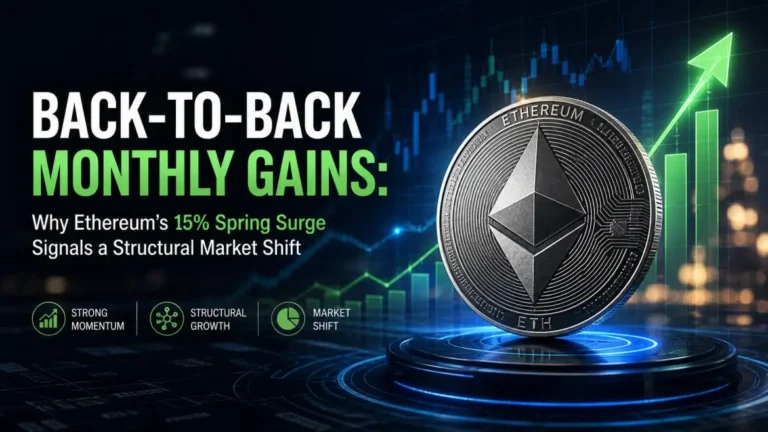
The digital asset landscape in May 2026 has reached a definitive tipping point. Following a sluggish start to the year, Ethereum (ETH) has demonstrated remarkable resilience, securing Back-to-Back Monthly Gains with a 7.07% rise in March and a 7.38% increase in April. This robust recovery in investor sentiment is not an isolated event; it is the direct result of a structural realignment of the global financial system.
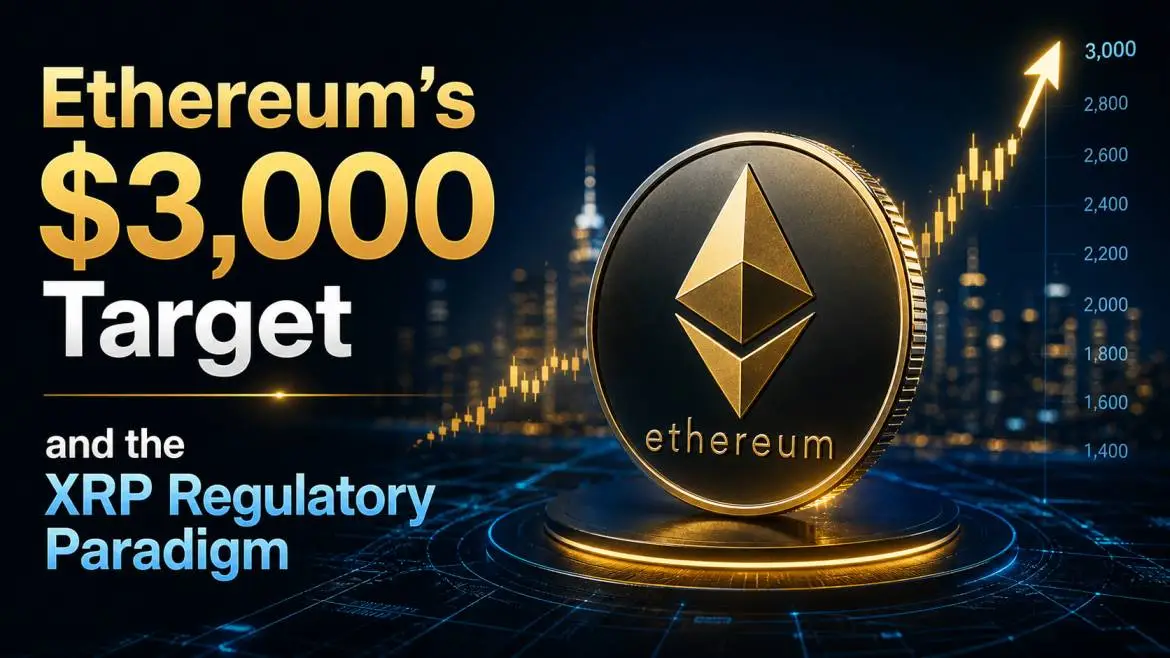
Central to this shift is the Landmark “Digital Commodity” Classification issued by the SEC and CFTC in late March. This joint regulatory framework placed XRP and Ether on the same legal footing as Bitcoin, providing the jurisdictional certainty that Tier-1 asset managers have sought for a decade. As of May 5, Ethereum is trading just below $2,500, with analysts at Journal du Coin and other major desks eyeing the $3,000 psychological barrier as the next major resistance.
The 2026 Regulatory Pivot: The “Digital Commodity” Era
The March 2026 joint release by the SEC and CFTC ended the era of “regulation by enforcement.” By formally recognizing 16 assets—including XRP, ETH, and SOL—as digital commodities, the U.S. government effectively cleared the path for multi-billion dollar institutional allocations.
This Landmark “Digital Commodity” Classification was bolstered by The CLARITY Act Momentum in the Senate. By early May, market odds for the Digital Asset Market CLARITY Act passing into law jumped to 69% on Polymarket. Reports indicate that negotiators finalized the text behind closed doors during the Senate recess, specifically positioning XRP as a primary beneficiary due to its role as a “Qualified Liquidity Bridge” for the stablecoin sector. This legal finality has removed the “tail risk” from institutional balance sheets, leading to the aggressive rebalancing we witnessed in April.
Ethereum’s Spring Surge: Back-to-Back Monthly Gains and ETF Inflows
Ethereum’s 15% cumulative gain over March and April was fueled by a historic institutional surge. On March 11, spot ETFs recorded a net inflow of $57.01 million, a session led by Fidelity’s FETH. This momentum culminated in a Record-Breaking 10-Day ETF Inflow Streak in late April, the longest unbroken streak of net inflows since the products launched in 2024.
The Institutional “Price Floor”
The 10-day streak, primarily driven by BlackRock’s ETHA and Fidelity’s FETH, provided a “mechanical bid” that stabilized prices against external shocks. When Geopolitical Volatility surrounding US-Iran nuclear talks triggered a sharp risk-off rotation on April 27, Ethereum faced a brief dip below the $2,300 level. However, the institutional liquidity buffer was so dense that the price saw a V-shaped recovery within 24 hours, reclaiming the $2,400 support and confirming the strength of the new “ETF floor.”
XRP’s Banking Utility: 13,000 Connections and ETF Success
XRP has mirrored Ethereum’s institutional success, with XRP ETFs Recording Their Best Month of 2026 in April. Net inflows reached $81.6 million for the month, bringing cumulative inflows since launch to roughly $1.44 billion. This demand is tied to Ripple’s fundamental utility. In late April, Ripple revealed that its global network now connects to 13,000 banks worldwide—a massive expansion facilitated by its 2025 acquisition of GTreasury.
The Volatility Squeeze and On-Chain Warnings
Despite the fundamental growth, XRP technicals signaled a “volatility squeeze” for most of April, with price fluctuating in a tight range between $1.30 and $1.50. On-chain warnings flashed on April 26 when exchange inflows spiked by 55 million XRP in 48 hours. This 12-fold increase signaled potential sell-side pressure from legacy whales. However, much like Ethereum, these dumps were largely absorbed by the institutional ETF pipeline, preventing a breach of the $1.25 structural support.
Technical Evolution: Pectra and the XRPL Smart Contract Transition
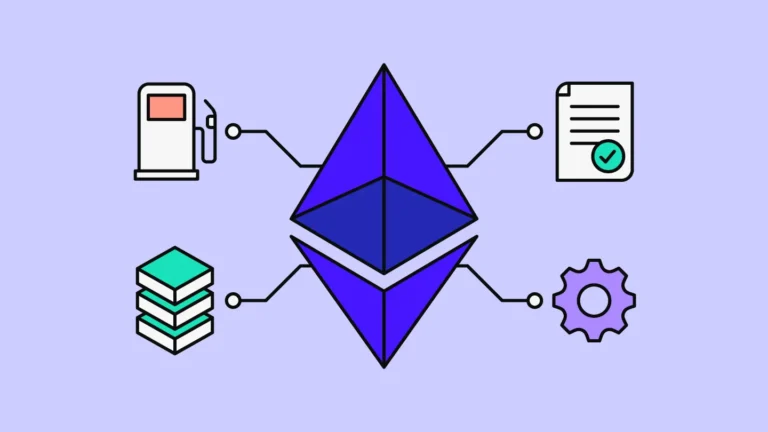
The technical foundations of both networks underwent significant upgrades in early 2026. For Ethereum, the Pectra Upgrade reached a milestone in April with the confirmation that validator limits will be raised from 32 ETH to 2,048 ETH. This change, driven by EIP-7251, allows for massive stake consolidation, reducing the p2p network load and allowing institutions to auto-compound rewards more efficiently.
The Staking “Supply Shock”
By the end of April, ETH locked in the staking ecosystem reached an all-time high. This mass accumulation created a “mechanical supply shock,” significantly reducing the liquid supply on exchanges. With more ETH “retired” into validator nodes, the price sensitivity to buy-side demand has increased, supporting the $3,000 target.
Simultaneously, node operators on the XRP Ledger (XRPL) met a mandatory “Smart Contract” Upgrade Deadline on April 6. This window was critical for supporting native “Hooks” and enhanced DeFi capabilities, signaling the ledger’s transition into a programmable institutional financial operating system.
The VC Paradox: Why Funding Plummets Amidst Price Gains
In a confusing divergence, Crypto VC Funding Plummeted in April to a 12-month low of $662.4 million. This was a 74% drop from March’s $2.59 billion. While public markets saw Back-to-Back Monthly Gains, venture capital saw a sharp pullback.
Analyzing the Funding Gap
- Negotiation Lag: April deals were negotiated during the Q1 stagnation, reflecting sentiment from 90 days ago.
- Due Diligence Cycles: VCs are now taking 4–5 months to close rounds, requiring full code audits and verified DAU metrics.
- Internal Bridge Rounds: Much of the capital is being deployed into existing portfolios via unannounced “bridge-to-profitability” rounds, which are under-reported in public data.
Pros, Cons, and Market Risk Analysis
Pros:
- Regulatory Parity: XRP and ETH now share the same legal status as Bitcoin.
- Institutional Absorption: ETFs are successfully absorbing whale sell-side pressure.
- Network Scalability: Pectra and XRPL upgrades are preparing the infrastructure for trillions in tokenized value.
Cons & Risks:
- Geopolitical Sensitivity: Digital assets remain the “first to sell” during global conflict spikes (e.g., the April 27 dip).
- VC Stagnation: A prolonged funding drought for startups could eventually slow the pace of ecosystem innovation.
- Centralization Risks: Increased validator limits (2,048 ETH) may lead to a more top-heavy staking landscape dominated by 4-5 major providers.
FAQ SECTION
– Why is Ethereum aiming for $3,000 in May 2026 ?
- The target is supported by Back-to-Back Monthly Gains in March and April, record-high staking (supply shock), and the consistent demand from the 10-day ETF inflow streak. Technical resistance sits at $2,900.
– What is the Landmark “Digital Commodity” Classification ?
- It is a 2026 joint rule by the SEC and CFTC that finalized the status of 16 assets, including XRP and ETH, as commodities. This provides the legal weight required for banks and ETFs to operate without security-risk concerns.
– How many banks are now connected to the Ripple network ?
- Ripple revealed in late April that it now has 13,000 bank connections globally, positioning it as the primary treasury and liquidity infrastructure for the legacy financial system.
– What was the impact of the April 27 geopolitical dip ?
- Ethereum briefly fell below $2,300 due to US-Iran nuclear talk uncertainty. However, strong institutional buying at the 200-day SMA ($2,285) led to a rapid recovery, confirming a high-density “price floor.”
– Why did crypto VC funding drop so sharply in April 2026 ?
- The 74% drop to $662.4M is largely due to a negotiation lag from the sluggish Q1 market and a shift toward unannounced internal bridge rounds for existing portfolio companies.
FINANCIAL DISCLAIMER
This report is for informational and analytical purposes only. Investing in digital assets involves significant risk, including the loss of principal. The 2026 regulatory environment is subject to ongoing legislative changes. Past performance, such as the Back-to-Back Monthly Gains, is not an indicator of future results. Consult a certified financial advisor before making investment decisions.